
As technology becomes more and more embedded in our daily lives, we have all been able to see the many ways that it can influence the “outside world” in good ways and not-so-good ways. And just like anything, children need help learning to navigate the digital world just as much as they do the physical one. This means they need help understanding the consequences of their actions, the effects they can have on others, and the importance of safety even when anonymous. They also need help managing all the things that go on around technology, like emotional support or abuse, manipulation/propaganda, copyright or piracy, and information sciences.
So, that would be where teachers come in! I know I’ve seen more information on digital ethics in general in schools today than ten years ago when I was in school, but even if we aren’t specifically “technology teachers” we are still going to need to help students learn to use technology appropriately within our discipline as well as in general. This includes modelling good citizenship and critical thinking skills, but extends beyond that too. To assist future teachers, I’ve found a few resources to help!
These resources are linked so that you can go and find them yourself if you’d like to read them, but I have also provided a brief summary of each. No one recipe will provide everything you need to know to teach digital skills and ethics, but having a good overview of the topic and a few different ideas should give everyone a place to start.
Education World: Tools for Teaching Cyber Ethics
Article: https://www.educationworld.com/a_tech/tech/tech055.shtml
This article summarizes the importance of digital education for students, emphasizing the importance of modelling good behavior and in trusting (informed) students to make good decisions. It highlights the ubiquity of technology and the internet in the classroom, and points out futility in trying to avoid using it entirely. Instead, it suggests students be taught safety at all ages, and even in conjunction with their parents and others. This article is a great place to start as far as getting new ideas and motivation to pursue more resources.
Computer Ethics Institute
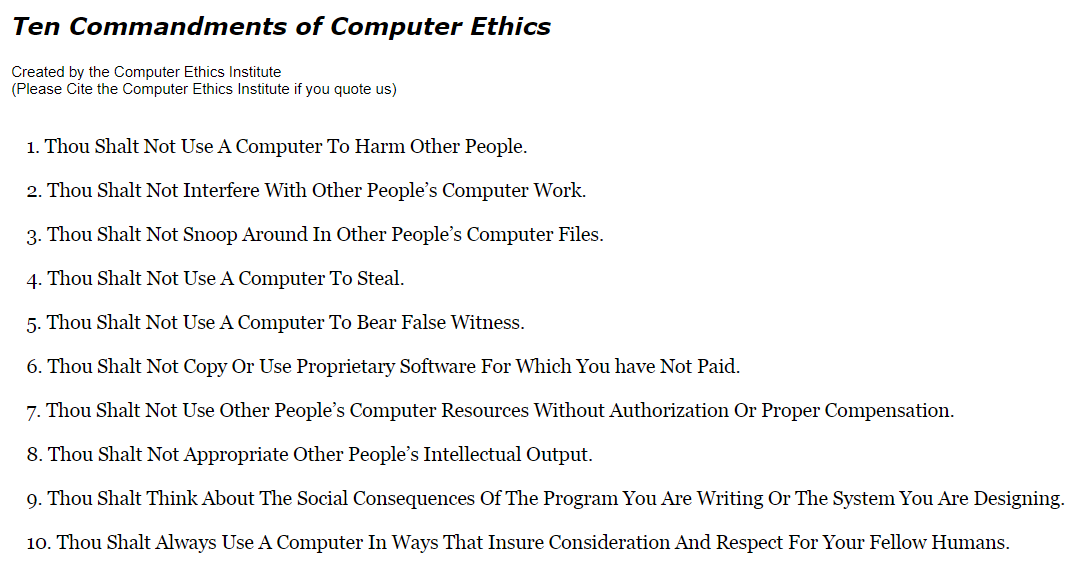
The Computer Ethics Institute is a nonprofit organization supported by a variety of schools, universities, and technology-related businesses, founded in 1985 with the mission of providing information for adults, professionals, and educators to promote technology literacy, safety, and ethics. They publish a variety of articles in various journals, and also publish their own journal, Protecting What Matters, and also put on events and conventions. They also put forward the “Ten Commandments of Computer Ethics” for technology use, which I found quoted in several places while researching for the post. All in all, this site puts out a lot of research on technology information and is a great resource for teachers who want to keep up with what is new in the field.
Common Sense Media

Common Sense Media is another nonprofit organization that supports research, education, and public policy around digital ethics and safety. Founded in 2003, this is the organization responsible for the ratings placed on video games, tv shows, and movies. And while you don’t necessarily have to agree with all their views, the site has an entire section for educators just on digital citizenship, with free lesson plans and materials for all grade levels from kindergarten through high school. If, after doing this reading you are feeling motivated but also a little overwhelmed, then this site is a good place to start. Peruse lessons, find materials, and get inspired!
 Miss Butler's Classroom
I like the point that you make about the physical and online world and how they are very similar, yet we need to learn how to navigate both of them.
LikeLike